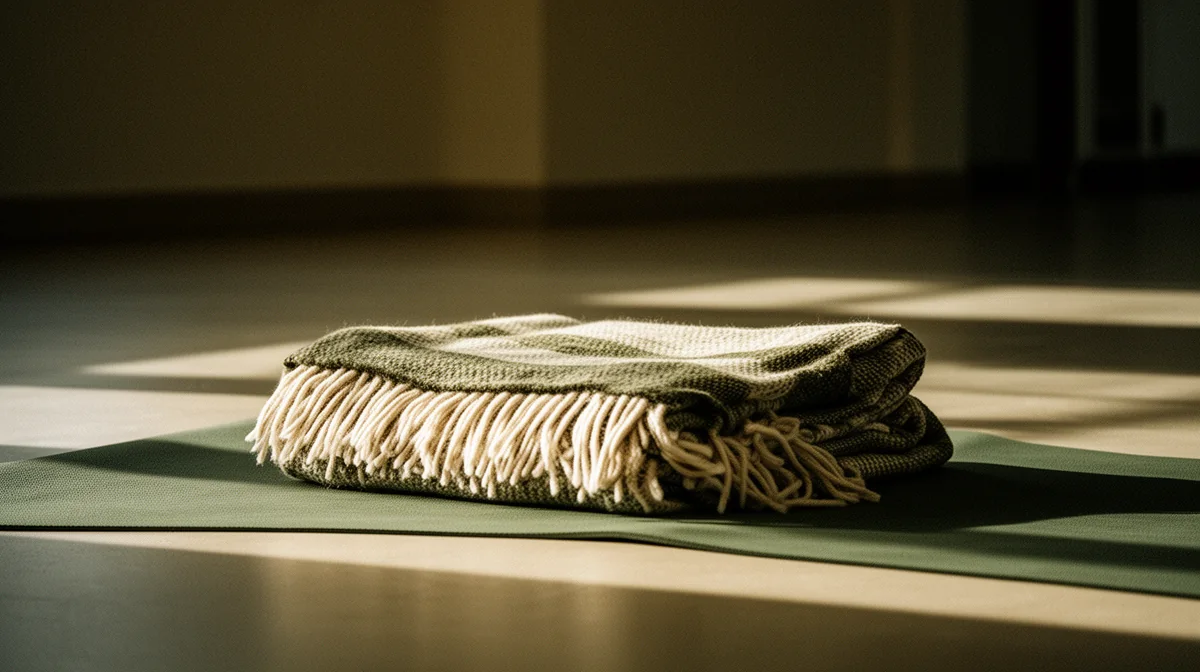
How to Use a Yoga Blanket: The Most Underrated Prop in the Room
Fold it, roll it, stack it, wear it — the humble blanket pads knees, levels hips, supports necks, and warms Savasana, all for the price of lunch.
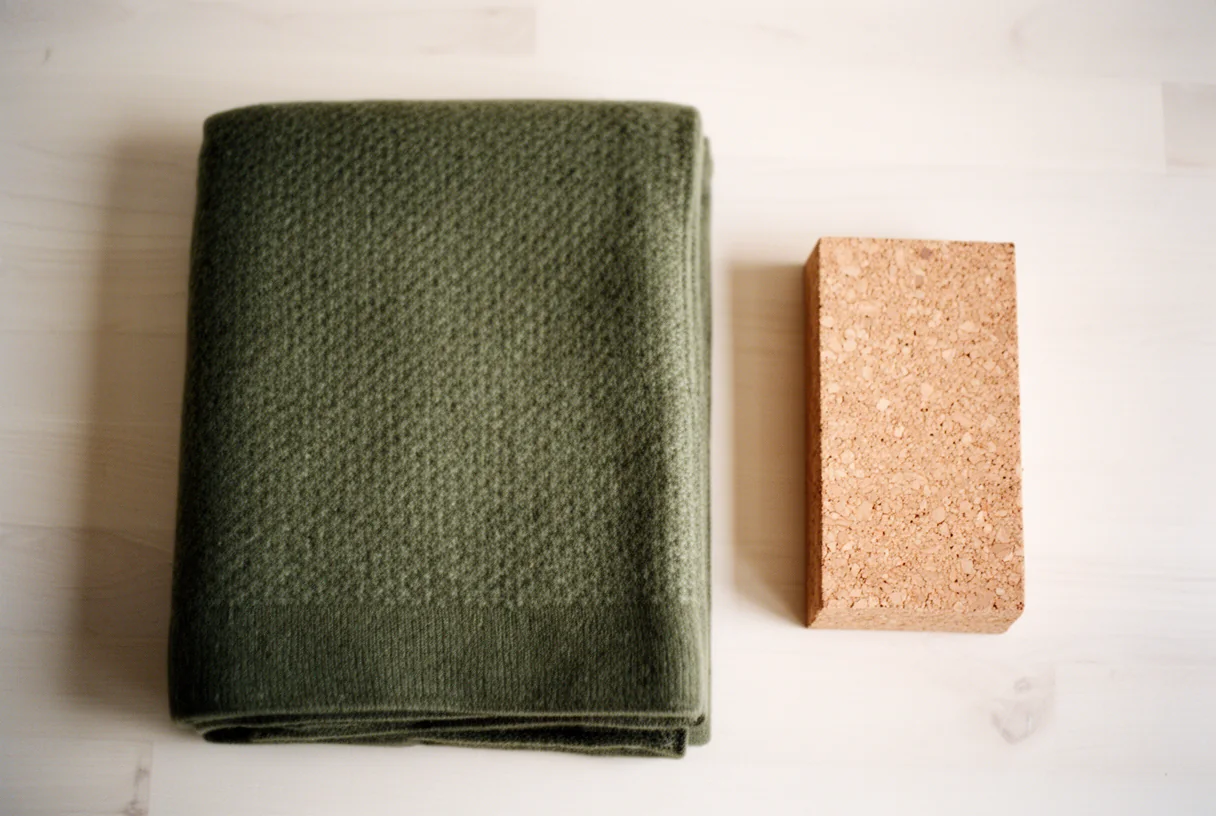
Studios stack blankets in the corner by the dozen, and there's a reason it's the prop teachers grab most: a blanket is the universal adapter of yoga equipment. It becomes padding, lift, support, warmth, or weight depending entirely on how you fold it — and at fifteen to twenty-five dollars for the classic woven falsa style, it's the cheapest serious upgrade a home practice can buy.
The skill is all in the folds. Learn three of them and the blanket replaces half a prop shelf.
The three folds
The pad — folded flat into a rectangle, two to four layers thick. This is the knee-saver: under the kneecaps in Low Lunge, Camel, Cat-Cow, and all kneeling work; under the pelvis in prone backbends; under the heels in squats that don't reach the floor. If kneeling poses are something you endure rather than practice, a pad changes your relationship with a third of the catalog in one class.
The lift — folded into a firm, narrow stack ten to fifteen centimeters tall. Sat on its edge, it tips the pelvis forward in cross-legged and seated poses so the spine stacks without effort — the single most common fix for "my back aches when I sit." The same lift under the hips levels seated folds for tight hamstrings, and under the head in Savasana it gives a forward-head posture a neck-neutral place to rest.
The roll — rolled tight like a sleeping bag. A junior bolster: under the knees in Savasana, under the ankles in Child's Pose (a strangely wonderful relief for stiff feet), along the spine for a gentle chest opener, under the neck for slow head turns at the end of a long day.
> A blanket is the universal adapter of yoga equipment — padding, lift, support, warmth, or weight, depending on the fold.
The Savasana suite
Final rest is where the blanket earns tenure, in three completely different jobs at once if you own three:
1. Under — the roll beneath the knees releasing the lower back, or the lift under the head. 2. Over — body temperature drops within a minute of true stillness, and a cold body quietly refuses to release. A blanket over you in Savasana is the difference between resting and enduring; in winter it's not optional. 3. As weight — a blanket folded heavy across the pelvis or thighs adds gentle pressure that many nervous systems read as deeply settling (the same principle as weighted blankets, at one-tenth the dose).
Teachers: offering blankets before Savasana rather than mid-shiver changes the last ten minutes of class for the whole room.
Quieter jobs
- Shoulder-stand foundation. The classic Iyengar setup — two to three firm folded blankets under the shoulders, head on the floor — protects the neck's curve in shoulder stand. This one matters: if you practice shoulder stand at all, this is the version to practice.
- Hip leveler in twists and pigeons. A folded edge under the lifted hip in Pigeon squares the pelvis so the stretch lands where it should.
- Wrapped warmth in pranayama. Seated breathing in a blanket wrapped around the shoulders sounds quaint and works completely — warmth is permission for stillness.
- Bolster understudy. Folded and stacked, a firm blanket impersonates a bolster well enough to learn every supported pose in the bolster guide before committing to one.
Buying notes
The classic Mexican falsa blanket is the studio standard for good reasons: dense weave, real weight, holds a fold without slumping, survives machine washing, costs little. Wool blankets are warmer, heavier, and firmer in stacks (the shoulder-stand choice) at a higher price and itch factor. What you want in any case is density — a fluffy throw collapses under load and holds no fold; the bedroom comforter fails the audition immediately. Weight is the feature, softness is the bonus.
One is useful. Two unlocks the stacked uses. Three means you, the knees, and the Savasana cover never compete. They also fold flat under a couch, which is more than the bolster can say.
A blanket will never be the prop anyone photographs. It will be the one you actually reach for, four times a practice, for the next ten years.